

Interventional Pain Management at 300 Middletown Blvd Suite 103, Langhorne, PA 19047
Cellara Pain Institute
Cellara Pain Institute is Doylestown’s destination for comprehensive pain management, offering minimally invasive pain procedures and same-week consultation for patients throughout Bucks County and the greater Philadelphia region.



Pain management is the specialized medical discipline dedicated to diagnosing the source of pain and eliminating it through precise, evidence-based treatment, not masking it with long-term medication. At Cellara Pain Institute, Dr. Mohamed Osman brings double board certification in Anesthesiology and Interventional Pain Management, along with Harvard fellowship training, to every patient consultation.
Whether you are living with chronic back pain, nerve pain, joint degeneration, or a complex pain condition, Cellara offers the full spectrum of minimally invasive pain procedures at 300 Middletown Blvd Suite 103, Langhorne, PA 19047, from targeted injections to advanced neuromodulation. Same-week consultation is available for new patients throughout Bucks County, Langhorne, and Philadelphia.

Head and Facial
Cellara Pain Institute treats facial and head pain from nerves, muscles, joints, surgery, or infection.

Neck
Cellara Pain Institute identifies and treats neck pain from nerves, muscles, discs, arthritis, or surgery-related issues.
Arm and Leg
We treat limb pain from joints, nerves, muscles, diabetes, fractures, or herniated discs at Cellara Pain Institute.
Back
Back pain impacts daily life—Cellara Pain Institute offers expert, lasting solutions tailored to your exact condition.
Pelvic
Cellara Pain Institute specialists uncover root pelvic pain causes and offer personalized treatment for long-term relief.
General Body
Cellara Pain Institute diagnoses and treats widespread body pain using effective, low-risk, personalized relief strategies.
Cancer
Cellara Pain Institute creates custom cancer pain plans—relief from treatment-related or cancer-induced discomfort.
What Is Pain Management?
Definition
Pain management is a branch of medicine focused on evaluating, diagnosing, and treating acute and chronic pain conditions using targeted clinical interventions. A specialist identifies the specific anatomical source (a compressed nerve, an inflamed joint, a damaged disc, or a sensitized pain pathway) and applies the most precise, least invasive treatment available.
Interventional Pain Management
A subspecialty in which board-certified physicians use image-guided procedures (fluoroscopy and ultrasound) to deliver treatments directly to the pain source with surgical-level precision, without surgery. Includes targeted injections, radiofrequency ablation, spinal cord stimulation, and other minimally invasive techniques.
What a Pain Management Doctor Does
Conducts a comprehensive physical exam, reviews imaging and diagnostic studies, identifies the underlying cause, develops a personalized treatment plan, performs interventional procedures, and coordinates ongoing care. Unlike a primary care physician who manages pain broadly, a pain management specialist has advanced fellowship training in the anatomy, physiology, and interventional treatment of pain.
The Cellara Approach
Nonpharmacologic, multimodal pain management, combining the most effective evidence-based interventional techniques to address pain from multiple angles, reduce reliance on medication, and help patients return to the activities that matter most.
Treatment Options:
Neuromodulation Treatments
01. Wireless Peripheral Nerve Stimulation
02. Dorsal Root Ganglion Stimulation Therapy
03. Spinal Cord Stimulation
Interventional Pain Procedures
01. Joint Injection
02. Nerve Blocks
03. Epidural Steroid Injection
04. Radiofrequency Ablation
Minimally Invasive Procedures
01. Radiofrequency Neurotomy (Endoscopic method)
02. SI Joint Fusion
03. Superion Interspinous Spacer (Vertiflex)
04. Mild Procedure (Vertos Medical)
05. Intrathecal Pump Implant
06. Kyphoplasty (Balloon Vertebroplasty)
How Does Pain Management Work?
Pain management works by treating the source of pain rather than suppressing its symptoms. The process at Cellara follows a structured, evidence-based pathway for every patient.
Step 01
Evaluation and Diagnosis
Dr. Osman begins with a thorough consultation: a review of your medical history, diagnostic imaging (CT, MRI, X-ray), neurological and physical examination, and, where indicated, nerve conduction studies or EMG. This diagnostic foundation ensures that every treatment decision is grounded in a confirmed anatomical diagnosis — not a symptom assumption.
Step 02
Individualized Treatment Planning
Pain management techniques are not one-size-fits-all. Acute pain management — pain that is recent, often injury-related, and expected to resolve — is treated differently from chronic pain management, which addresses persistent pain lasting more than three months and typically involving central sensitization, structural changes, or ongoing tissue pathology. Dr. Osman develops a treatment plan tailored to the type, source, severity, and duration of your pain, your functional goals, and your medical history.
Step 03
Interventional Treatment
Treatments are delivered under fluoroscopic or ultrasound guidance for maximum accuracy. Depending on your diagnosis, this may include targeted injections, radiofrequency ablation to disrupt pain signals, neuromodulation therapies such as spinal cord stimulation, or minimally invasive surgical alternatives for structural conditions. All procedures are performed by Dr. Osman personally — not a physician assistant or nurse practitioner.
Step 04
Follow-Up and Optimization
Pain management is an ongoing clinical relationship, not a single appointment. Dr. Osman monitors your response to treatment, adjusts the plan as needed, and coordinates with your referring providers and primary care physician to ensure continuity of care.
The goal of comprehensive pain management at Cellara is measurable: reduced pain intensity, improved physical function, and a reduced need for long-term pain medication.
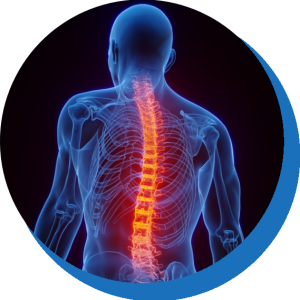
Back Pain
Back pain is the most common reason patients seek pain management care in Bucks County. Cellara Pain Institute treats all forms of back pain, from acute muscle strain to complex structural conditions.
Neck Pain and Cervical Conditions
Neck pain causes range from postural strain to serious degenerative conditions. When neck pain is accompanied by arm pain, numbness, or weakness, it indicates nerve involvement that warrants prompt specialist evaluation.
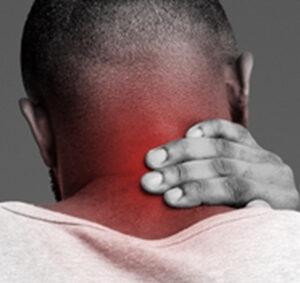
Cervical Radiculopathy: Pinched nerves in the neck causing pain, numbness, or tingling into the arms

Joint Pain
Cellara Pain Institute is a destination for patients seeking a joint pain doctor in Bucks County for knee, hip, shoulder, ankle, wrist, and elbow conditions — without surgery as the first option.
Nerve Pain
Nerve pain conditions require a specialist who understands the anatomy of the peripheral and central nervous system and has access to advanced neuromodulation therapies when conservative options fall short.


Headaches and Facial Pain
Additional Conditions
Pelvic Pain: Pudendal neuralgia, sacroiliac joint dysfunction, pelvic floor dysfunction, and coccydynia
Cancer-Related Pain: Compassionate, evidence-based palliative pain management using nerve blocks, spinal cord stimulation, and targeted therapies
Post-Surgical Pain: Failed back surgery syndrome and other post-surgical pain syndromes
Fibromyalgia: Widespread musculoskeletal pain, fatigue, and sleep disturbance
Arthritis and Osteoarthritis: Inflammatory and degenerative joint pain across multiple sites
Sports Injuries: Tendinopathies, ligament sprains, meniscus and labral injuries
Interventional Pain Management Procedures at Cellara Pain Institute
Every procedure at Cellara Pain Institute is performed personally by Dr. Mohamed Osman — double board-certified in Anesthesiology and Interventional Pain Medicine, Harvard fellowship-trained, and recognized as a Castle Connolly Top Doctor for 2024 and 2025. All procedures are performed under fluoroscopic (X-ray) or ultrasound guidance for maximum accuracy and patient safety.
▸ Injections
Facet Joint Injections
Facet joint injections deliver anesthetic and anti-inflammatory corticosteroid directly into the affected facet joint under fluoroscopic guidance. They serve both a diagnostic function — confirming the facet joint as the pain source — and a therapeutic function, reducing inflammation and pain.
Medial Branch Blocks (MBB)
Medial branch blocks involve the precise injection of local anesthetic onto the medial branch nerves — small nerves that carry pain signals from the facet joints to the brain. They serve primarily as a diagnostic tool to confirm facet-mediated pain before proceeding to radiofrequency ablation.
Nerve Blocks
Cellara offers a full range of targeted nerve blocks for regional pain relief:
- Selective Nerve Root Block (SNRB) — for radiculopathy from disc herniation or spinal stenosis
- Stellate Ganglion Block — for CRPS, hyperhidrosis, Raynaud’s phenomenon, and sympathetically maintained pain
- Sympathetic Nerve Blocks — lumbar sympathetic, celiac plexus, and superior hypogastric plexus blocks for CRPS, visceral cancer pain, and complex pelvic pain
- Occipital Nerve Blocks — for occipital neuralgia and cervicogenic headaches
SI Joint Injections
SI joint injections deliver anesthetic and corticosteroid directly into the sacroiliac joint under fluoroscopic guidance, reducing inflammation and providing both diagnostic and therapeutic benefit.
Radiofrequency Ablation (RFA)
RFA uses precisely directed radiofrequency energy to heat and disrupt the medial branch nerves — the small nerves that transmit pain signals from arthritic facet joints to the brain. By interrupting this pain transmission pathway, RFA can provide substantial and often long-lasting relief from facet-mediated neck, mid-back, and lower back pain. Many patients experience pain relief lasting 12 to 24 months or longer. The procedure can typically be repeated when symptoms return, with similar or comparable relief.
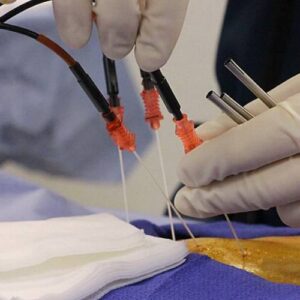
▸ Neuromodulation
Spinal Cord Stimulation (SCS)
Spinal cord stimulation is a well-established, FDA-approved neuromodulation therapy for chronic pain that has not responded to conservative or interventional treatments. Thin leads are placed into the epidural space, delivering mild electrical impulses that modify pain signals before they reach the brain. Modern SCS systems include traditional tonic, high-frequency (10 kHz), burst, and closed-loop adaptive stimulation. SCS begins with a 5 to 7 day trial before permanent implant — a try-before-you-buy approach that makes SCS a uniquely low-risk intervention.
Dorsal Root Ganglion (DRG) Stimulation
DRG stimulation targets the dorsal root ganglion — a cluster of sensory nerve cell bodies at the junction of the spinal canal and each exiting nerve root. FDA-approved for CRPS, it shows particular promise for focal pain conditions including groin pain, knee pain, foot pain, and other anatomically precise pain distributions that are difficult to address with conventional SCS.
Peripheral Nerve Stimulation (PNS)
PNS involves placing a small electrode near a specific peripheral nerve to deliver therapeutic electrical signals. It is a minimally invasive option for peripheral mononeuropathies, post-surgical nerve pain, migraine and occipital neuralgia, peripheral CRPS, and focal pain conditions involving identified peripheral nerves.
Nerve Blocks
Cellara offers a full range of targeted nerve blocks for regional pain relief:
- Selective Nerve Root Block (SNRB) — for radiculopathy from disc herniation or spinal stenosis
- Stellate Ganglion Block — for CRPS, hyperhidrosis, Raynaud’s phenomenon, and sympathetically maintained pain
- Sympathetic Nerve Blocks — lumbar sympathetic, celiac plexus, and superior hypogastric plexus blocks for CRPS, visceral cancer pain, and complex pelvic pain
- Occipital Nerve Blocks — for occipital neuralgia and cervicogenic headaches
▸ Minimally Invasive Spine
SI Joint Fusion (iFuse Implant)
For patients with confirmed SI joint dysfunction whose pain has not responded adequately to injections, the iFuse Implant System offers a minimally invasive surgical option. Small titanium implants are placed across the SI joint through a tiny incision, promoting bone fusion and reducing pathological motion.
Kyphoplasty and Vertebroplasty
Both procedures treat vertebral compression fractures — most commonly caused by osteoporosis. Kyphoplasty uses a balloon to restore vertebral height before filling with bone cement. Vertebroplasty injects bone cement directly into the fractured vertebra. Both are outpatient procedures that can provide rapid, significant pain relief.
MILD Procedure (Minimally Invasive Lumbar Decompression)
The MILD procedure is an FDA-cleared, incision-free outpatient treatment for lumbar spinal stenosis — particularly stenosis caused by thickened ligamentum flavum causing neurogenic claudication. Dr. Osman removes small amounts of excess bone and thickened ligament tissue through a tiny port — smaller than a baby aspirin — to restore space in the spinal canal without open surgery.
Benefits of Interventional Pain Management vs. Surgery or Long-Term Medication
Many patients living with chronic pain are told they face two options: lifelong medication or surgery. Interventional pain management offers a third path — one that is more precise than medication and less invasive than surgery.
Compared to Surgery
Surgery carries risks including anesthesia complications, infection, nerve damage, prolonged recovery, and failure to resolve pain. Many patients with back pain, joint pain, and nerve pain who are told they need surgery are in fact excellent candidates for interventional procedures that deliver equivalent or superior pain relief with far shorter recovery times and significantly lower procedural risk. Procedures such as radiofrequency ablation, spinal cord stimulation, and the MILD procedure for lumbar stenosis are performed as outpatient treatments with no general anesthesia and recovery measured in days, not months.
Compared to Long-Term Medication
Oral pain medications address pain systemically — reaching every tissue in the body rather than the specific anatomical source of pain, leading to side effects, tolerance, and diminishing effectiveness over time. Interventional pain management delivers treatment directly to the pain origin under image guidance, achieving targeted relief without the systemic burden of daily medication. Cellara Pain Institute’s approach is explicitly opioid-sparing: the goal is to reduce or eliminate the need for ongoing pain medication, not supplement it.
Compared to Physical Therapy or Chiropractic Alone
Physical therapy and chiropractic care are valuable components of a comprehensive pain management plan, but they cannot resolve structurally driven pain. A herniated disc pressing on a nerve root, a facet joint destroyed by arthritis, or a sacroiliac joint that has lost structural integrity will not respond to manual or exercise therapy alone. Interventional treatment addresses the structural source directly, allowing patients to engage more effectively in rehabilitation and return to activity faster.
How to Choose the Right Pain Management Doctor Near You
If your primary care physician or orthopedic specialist has referred you to pain management, or if you are searching for a pain doctor near you on your own, there are several criteria that separate a highly qualified interventional pain specialist from a general pain management practice.
01 · Board Certification in Pain Medicine
Look for a physician who is fellowship-trained and board-certified specifically in Pain Medicine – not just a physician who prescribes pain medication. Dr. Mohamed Osman holds dual board certification in Anesthesiology and Interventional Pain Medicine, with fellowship training at Harvard Medical School.
02 · Interventional Training and Scope
A comprehensive pain management specialist should offer the full spectrum of interventional procedures – from diagnostic nerve blocks and targeted injections to radiofrequency ablation, neuromodulation, and minimally invasive spine procedures – rather than relying on injections alone. The breadth of available treatments directly determines the quality of options available to you.
03 · Image Guidance on Every Procedure
All interventional procedures should be performed under fluoroscopic or ultrasound guidance. Blind injections – performed without image guidance – carry a higher risk of inaccurate placement and are not consistent with the current standard of interventional pain care. At Cellara Pain Institute, every procedure is image-guided, every time.
04 · Personalized Care, Not Volume-Based Practice
In high-volume pain clinics, patients often see physician assistants or nurse practitioners rather than the attending physician for their procedures. At Cellara, Dr. Osman personally performs every procedure and conducts every consultation – your care is not delegated.
05 · Self-Referrals Are Welcome
You do not need a referral from a primary care physician to be seen at Cellara Pain Institute. Patients may self-refer. Same-week consultations are frequently available for new patients in Doylestown, Bucks County, Langhorne, and the greater Philadelphia area.
Are Interventional Pain Procedures Safe? Understanding Risks and Side Effects
Interventional pain procedures have an established safety profile validated across decades of clinical research and millions of procedures performed worldwide. When performed by a fellowship-trained, board-certified specialist using real-time image guidance, the risks associated with interventional pain management are low and well-characterized.
Common, Temporary Side Effects
Common side effects may include mild soreness or bruising at the injection site, brief post-procedure headache for spinal procedures, a temporary increase in pain for one to two days following a procedure (known as a post-procedural flare), and minor fatigue. These effects typically resolve within 24 to 72 hours.
Rare but Recognized Risks
Rare but recognized risks include infection, bleeding, nerve irritation, or allergic reaction to injected medications. These risks are minimized by sterile technique, pre-procedure patient screening, and the use of image guidance to confirm accurate needle placement before any medication is delivered.
Corticosteroid Injections
Corticosteroid injections may result in temporary elevation of blood sugar — particularly relevant for patients with diabetes — and are generally limited in frequency to avoid systemic effects over time. Dr. Osman discusses these considerations with every patient before treatment.
Spinal Cord Stimulation
Spinal cord stimulation involves an implantable device and carries the procedural risks associated with any minor surgical implant, including lead migration, device malfunction, or infection. The trial phase allows patients to evaluate effectiveness before committing to permanent implantation.
Every patient at Cellara Pain Institute receives a complete pre-procedure consultation covering their specific health history, medications, and risk profile. Dr. Osman reviews the expected benefits and risks of every planned procedure in detail before obtaining informed consent. No procedure is performed without your full understanding and agreement.
What to Expect at Your First Pain Management Appointment
Before Your Appointment
New patients at Cellara Pain Institute are asked to complete the following forms prior to their scheduled consultation: Release of Medical Records, HIPAA Notice of Privacy Practices, Consultation Attendance Policy, and the New Patient Pain Consultation Form. These documents will be sent to you by email or postal mail ahead of your appointment.
Please also bring:
- A current list of all medications
- All diagnostic imaging related to your condition (CT scans, X-rays, MRIs)
- Any EMG or Nerve Conduction Study results for the affected area
- Relevant medical history and hospitalization records
- Mental health diagnoses, treatment records, or evaluations
- Your two most recent office visit or progress notes
- Documentation of any recent pain-related treatments (physical therapy, chiropractic care)
- Surgical records relevant to your condition
During Your Consultation
Please arrive 15 to 30 minutes before your scheduled appointment. At check-in, our front desk staff will review your photo ID and insurance card. A clinical assistant will take your vital signs and review your current medications. You will be asked about your pain symptoms, their location, duration, severity, and how they affect your daily function.
Dr. Osman will then meet with you personally to perform a comprehensive physical examination, discuss possible causes of your pain, and develop an individualized treatment plan. Before you leave, he may arrange referrals for additional imaging or therapy, review prior authorization requirements, and schedule any follow-up appointments. Clinical notes from your visit will be sent to your referring provider or primary care physician.
Same-week consultation appointments are frequently available. Call Cellara Pain Institute at 267-500-9595 or request a consultation online.
How Long Does Pain Relief Last from Interventional Procedures?
One of the most common questions patients ask before their first interventional procedure is how long the results will last. Duration varies by procedure type, the underlying condition being treated, the patient’s overall health, and how early in the disease process treatment is initiated.
Dr. Osman will discuss realistic expectations for each procedure during your consultation, including when re-treatment is appropriate and how to optimize and extend results.
| Procedure | Typical Duration of Relief | Notes |
|---|---|---|
| Epidural Steroid Injection | 4 to 12 weeks per injection | Can be repeated up to 3 times per year; most effective for inflammatory conditions |
| Facet Joint Injection | 4 to 8 weeks | Primarily diagnostic; relief confirms candidacy for RFA |
| Medial Branch Block | Days to weeks | Diagnostic procedure; not intended as standalone long-term treatment |
| Radiofrequency Ablation | 12 to 24 months or longer | Repeatable when nerves regenerate; comparable relief on repeat |
| Nerve Blocks | Variable; weeks to months | Often used in a series for cumulative effect |
| Spinal Cord Stimulation | Long-term (device-dependent) | Ongoing therapy; adjustable; battery replacement typically every 5 to 10 years |
| DRG Stimulation | Long-term (device-dependent) | Similar to SCS with greater anatomical specificity |
| SI Joint Injections | 4 to 12 weeks | Repeated injections may be appropriate; fusion considered for lasting dysfunction |
| SI Joint Fusion (iFuse) | Long-term structural correction | Permanent stabilization of SI joint |
| MILD Procedure | Long-term decompression | Studies show durable improvement in walking tolerance at 5 years |
| Kyphoplasty / Vertebroplasty | Rapid and durable | Structural correction of compression fracture; typically one-time procedure |
| PRP Therapy | 6 to 12 months or longer | Varies by tissue healing capacity and number of treatments |
Understanding Your Pain: Acute, Chronic, and Neuropathic
Acute Pain
Acute pain is pain that is recent in onset, typically related to a specific injury, procedure, or inflammation, and expected to resolve as the underlying cause heals. Examples include post-surgical pain, a new disc herniation, or a sports injury. Acute pain management at Cellara focuses on preventing the transition to chronic pain through early, targeted intervention — treating the anatomical source before central sensitization develops.
Chronic Pain
Chronic pain is pain that persists for more than three months, often beyond the expected period of tissue healing. It may involve structural changes that are ongoing — a degenerated joint, a chronically compressed nerve root — or central nervous system sensitization in which the pain system itself has become amplified. Chronic pain management requires a multimodal, sustained approach that addresses both the peripheral pain source and the central neurological factors that perpetuate it. Examples include chronic back pain, fibromyalgia, CRPS, and long-standing neuropathy.
Neuropathic Pain
Neuropathic pain arises from damage to or dysfunction of the peripheral or central nervous system itself. It is characterized by burning, shooting, electric-shock, or tingling sensations, often without ongoing tissue injury. Conditions including sciatica, peripheral neuropathy, postherpetic neuralgia, CRPS, and occipital neuralgia are neuropathic in nature. Neuropathic pain responds well to interventional approaches including nerve blocks, neuromodulation, and targeted radiofrequency procedures.
Understanding which type of pain you have is the first step toward choosing the right treatment path. Dr. Osman’s diagnostic process identifies the nature and source of your pain before any treatment is recommended.
Pain Management for Active Seniors: Maintaining Mobility Without Surgery
For active seniors in Bucks County who want to maintain their independence, mobility, and quality of life without major surgery, interventional pain management offers targeted, low-risk solutions that fit an active lifestyle.
Age-related joint changes — including knee and hip osteoarthritis, spinal stenosis, compression fractures, and sacroiliac joint dysfunction — are among the most common reasons older adults experience progressive pain and reduced mobility. These conditions are frequently managed at Cellara with outpatient procedures that require no general anesthesia, no hospital admission, and recovery measured in days.
Options particularly well-suited to active seniors include:
- Knee and hip joint injections (corticosteroid, hyaluronic acid, or PRP) to reduce pain and improve joint lubrication without surgery
- Radiofrequency ablation for facet-mediated back and knee pain, providing months of relief from a single outpatient procedure
- MILD Procedure for lumbar spinal stenosis — restoring walking tolerance and reducing leg pain without incision or general anesthesia
- Spinal cord stimulation for patients with complex chronic back or leg pain who are not surgical candidates or prefer to avoid surgery
Dr. Osman understands that for active seniors, the goal is not simply pain reduction — it is maintaining the capacity to walk, exercise, travel, and engage fully with daily life. Treatment plans are built around that objective.
Pain Management for Working Professionals: Effective Relief, Minimal Downtime
For working professionals in Doylestown, Langhorne, and the Philadelphia metro area, chronic or recurring pain is not just a health problem — it is a productivity problem. Missing work for recovery or managing pain through a full workday carries real professional and financial consequences.
Cellara Pain Institute’s interventional approach is designed with minimal-downtime outcomes in mind. Most procedures are performed in an outpatient setting, take 15 to 45 minutes, and allow patients to return to desk work within one to two days — and to most physical activities within one week.
Practical features for working patients:
- Same-week consultation appointments are frequently available
- Outpatient procedures with no hospital admission required
- Rapid return to work — most patients return to sedentary work within 24 to 48 hours of an injection-based procedure
- No primary care referral required — self-referrals are accepted, removing an additional scheduling delay
Whether you are managing recurring back pain, a joint condition, or nerve pain that makes long hours at a desk or on your feet unsustainable, Cellara Pain Institute provides a clinical solution.
Non-Medication, Evidence-Based Options for Chronic Pain
Many patients arrive at Cellara Pain Institute with a clear preference: they want effective chronic pain relief without relying on daily oral medication. This is not only a reasonable goal — it is Cellara’s clinical philosophy.
Every treatment pathway at Cellara Pain Institute is built around a nonpharmacologic, interventional-first approach. Rather than prescribing pain medication as a primary strategy, Dr. Osman identifies the anatomical source of your pain and targets it directly with evidence-based procedures that interrupt pain at its origin.
Non-medication treatment options available at Cellara include:
- Radiofrequency ablation — disrupts pain signal transmission from arthritic joints without medication
- Spinal cord stimulation — modifies how pain signals are processed using implantable neurostimulation
- Targeted nerve blocks — provide diagnostic and therapeutic relief by interrupting specific pain pathways
- Joint injections (PRP, hyaluronic acid) — orthobiologic and viscosupplement injections that support joint health rather than simply suppressing inflammation
- MILD Procedure — structurally addresses the cause of lumbar stenosis without surgery or ongoing medication
- IV therapy and peptide therapy — systemic anti-inflammatory support through intravenous nutrients and biologically active signaling peptides
These approaches represent integrative, evidence-based pain management — not experimental or unproven alternatives. Each has published clinical data supporting its use in appropriate patient populations, and each is offered at Cellara only when it is clinically indicated for your specific condition.
Pain Management for Athletes: Returning to Sport After Injury or Chronic Pain
Athletic patients — whether competitive, recreational, or occupational — have a different relationship with pain than the general population. The goal is not just pain relief: it is a full return to function, sport, and performance.
Cellara Pain Institute treats a full range of sports-related pain conditions with minimally invasive approaches designed to return patients to activity as quickly and completely as possible.
Conditions commonly treated in athletic patients:
- Rotator cuff tears and shoulder tendinopathy
- Knee pain from meniscus injury, patellofemoral syndrome, or ligament strain
- Ankle instability and Achilles tendinopathy
- Hip labral tears and hip flexor tendinopathy
- Elbow pain (tennis elbow, golfer’s elbow, medial epicondylitis)
- Wrist and hand tendinopathies
Treatment approaches for athletic patients:
- Ultrasound-guided PRP injections into tendons, ligaments, and joint surfaces to accelerate biological healing
- BMAC therapy for advanced joint degeneration in patients who want to avoid joint replacement
- Nerve hydrodissection and targeted nerve blocks for post-injury nerve pain
- Radiofrequency ablation for chronic joint pain that limits training capacity
- Return-to-activity planning coordinated with the patient’s physical therapist or sports medicine team
Dr. Osman works with each athletic patient to establish a realistic return-to-sport timeline and to select treatments that support tissue healing rather than simply masking pain during competition.
How to Choose the Right Pain Management Doctor Near You
If your primary care physician or orthopedic specialist has referred you to pain management, or if you are searching for a pain doctor near you on your own, there are several criteria that separate a highly qualified interventional pain specialist from a general pain management practice.
Langhorne, PA 19047
Primary location.
Bucks County, PA
Serving all of Bucks County including Newtown, Warminster, Hatboro, Horsham, and Chalfont.
Langhorne, PA
Patients from Langhorne and Lower Bucks County regularly choose Cellara for interventional pain care.