

Home > About > Back Pain
Back Pain Treatment at 300 Middletown Blvd Suite 103, Langhorne, PA 19047 — Minimally Invasive Care at Cellara Pain
Back pain treatment is Cellara Pain Institute’s most frequently requested specialty. Whether you are living with chronic back pain from a herniated disc, radiculopathy from spinal stenosis, or acute lower back pain that has not responded to rest, our board-certified pain physician Dr. Mohamed Osman delivers minimally invasive back pain treatment at 300 Middletown Blvd Suite 103, Langhorne, PA 19047, using image-guided procedures that target the source of pain directly. Same-week consultation is available for new patients across Bucks County and Langhorne. We restore function without surgery.
What Is Back Pain?
Back pain is a musculoskeletal condition characterized by discomfort, stiffness, or nerve-related pain in the cervical (neck), thoracic (mid-back), or lumbar (lower back) regions of the spine. It is one of the most common causes of disability and lost productivity worldwide, affecting an estimated 80 percent of adults at some point in their lives.
Back pain is classified by duration and by the underlying mechanism:
- Acute back pain lasts fewer than 12 weeks. It is typically triggered by injury, strain, or a sudden structural event such as a disc herniation. Most acute episodes resolve with conservative care.
- Chronic back pain persists beyond 12 weeks and often reflects ongoing structural pathology, central sensitization, or a pain condition that has not been adequately identified and treated. Chronic lower back pain requires specialist evaluation rather than a wait-and-see approach.
- Axial back pain is localized to the spine and surrounding musculature without radiating to the limbs.
- Radicular pain radiates along a nerve pathway, typically into the leg (from the lumbar spine) or the arm (from the cervical spine), and indicates nerve-root involvement.
At Cellara Pain Institute, back pain is treated as a diagnosis, not a symptom. Every patient receives a thorough evaluation to identify the specific anatomical pain generator before any treatment decision is made.
Understanding the root cause of back pain is how Cellara Pain Institute delivers lasting relief. The next section outlines the most common conditions underlying back pain and the evidence-based treatments available at our Langhorne, PA 19047 clinic
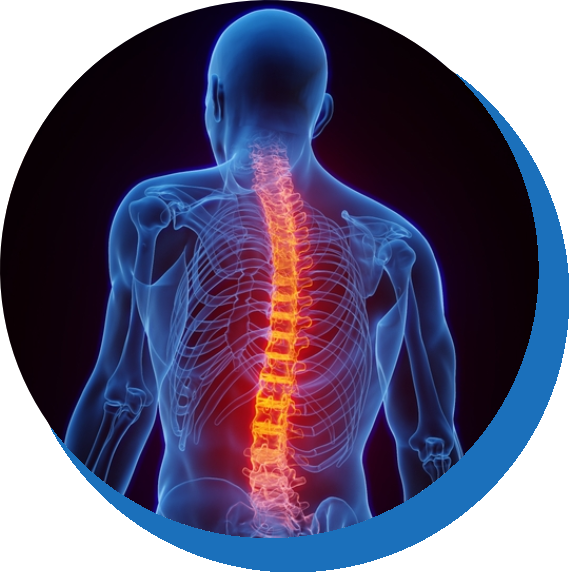
What Causes Back Pain? Common Conditions Behind Your Symptoms
Back pain is a symptom, not a standalone diagnosis. The most effective back pain treatment begins by identifying the specific structural, neurological, or inflammatory cause. Below are the most frequently diagnosed conditions behind back pain at Cellara Pain Institute.
Herniated Disc
A herniated disc (Entity) occurs when the soft inner nucleus of an intervertebral disc pushes through the outer annular layer (Attribute), pressing on adjacent spinal nerves and causing pain, numbness, tingling, or weakness that radiates into the leg or arm (Value). Also called a slipped disc, bulging disc, or ruptured disc, lumbar disc herniation is the single most common structural cause of lower back pain and sciatica.
Sciatica and Lumbar Radiculopathy
Sciatica (Entity) is the irritation or compression of the sciatic nerve root, most commonly at the L4-L5 or L5-S1 level of the lumbar spine (Attribute), producing sharp, burning, or electric-shock pain that travels from the lower back through the buttock and into the leg or foot (Value). Sciatica is most often caused by a herniated lumbar disc or spinal stenosis but can also stem from piriformis syndrome or sacroiliac joint dysfunction.
Spinal Stenosis
Spinal stenosis (Entity) is a narrowing of the spinal canal or neural foramina (Attribute) that compresses the spinal cord or nerve roots, causing neurogenic claudication: aching, heaviness, or pain in the legs that worsens with standing and walking and is relieved by sitting or leaning forward (Value). Lumbar spinal stenosis is more common in adults over 50 and is frequently caused by arthritis, thickened ligamentum flavum, or disc degeneration.
Spinal Stenosis
Spinal stenosis (Entity) is a narrowing of the spinal canal or neural foramina (Attribute) that compresses the spinal cord or nerve roots, causing neurogenic claudication: aching, heaviness, or pain in the legs that worsens with standing and walking and is relieved by sitting or leaning forward (Value). Lumbar spinal stenosis is more common in adults over 50 and is frequently caused by arthritis, thickened ligamentum flavum, or disc degeneration.
Facet Joint Arthritis and Spondylosis
Facet joint arthritis (Entity) is inflammation and degeneration of the small paired joints at the back of each vertebral segment (Attribute), producing axial lower back or neck pain that is typically worse in the morning, with prolonged standing, and with extension of the spine (Value). Facet-mediated pain is one of the most common causes of chronic lower back pain in adults over 45 and is highly responsive to radiofrequency ablation (RFA).
Facet Joint Arthritis and Spondylosis
Facet joint arthritis (Entity) is inflammation and degeneration of the small paired joints at the back of each vertebral segment (Attribute), producing axial lower back or neck pain that is typically worse in the morning, with prolonged standing, and with extension of the spine (Value). Facet-mediated pain is one of the most common causes of chronic lower back pain in adults over 45 and is highly responsive to radiofrequency ablation (RFA).
Vertebral Compression Fractures
Vertebral compression fractures (Entity) are fractures within the vertebral body, most commonly caused by osteoporosis, trauma, or metastatic disease (Attribute), producing sudden, severe localized back pain at the fracture level that worsens with standing and improves when lying flat (Value). Kyphoplasty and vertebroplasty are effective, minimally invasive treatments performed at Cellara for eligible patients.
Nerve pain (neuropathic pain) (Entity) arises from damage to or dysfunction of the nervous system itself, rather than from tissue injury (Attribute), producing burning, shooting, tingling, or electric-shock pain that may be constant or intermittent and often does not respond to standard pain medication (Value).
What Are the Symptoms of Back Pain, and When Should I See a Doctor?
Back pain presents differently depending on the underlying condition. The following symptom profiles help distinguish types of back pain and guide appropriate clinical evaluation.
Common Back Pain Symptoms
- Dull, aching lower back pain that worsens with prolonged sitting, standing, or bending
- Sharp, stabbing pain at the site of injury or arthritis
- Burning, tingling, or electric-shock pain that radiates into the leg or foot (radicular pain, sciatica)
- Numbness or weakness in one or both legs
- Stiffness in the morning or after inactivity that loosens with movement
- Pain that worsens with spinal extension (bending backward) and eases with forward flexion
- Mid-back or thoracic pain that may refer to the chest or abdomen
- Leg pain or cramping that is triggered by walking and relieved by sitting (neurogenic claudication from spinal stenosis)
WHEN TO SEEK URGENT CARE — Back Pain Red Flags
- New bladder or bowel dysfunction alongside back pain (possible cauda equina syndrome – emergency)
- Progressive leg weakness or bilateral leg weakness
- Back pain accompanied by fever, night sweats, or unexplained weight loss
- Back pain following significant trauma (fall, motor vehicle accident)
- Constant, severe back pain that is not relieved by any position
- Back pain in a patient with a history of cancer
How Is Back Pain Diagnosed at Cellara Pain Institute?
Diagnostic evaluation at Cellara Pain Institute (Entity) combines history, physical examination, diagnostic imaging, and where appropriate, diagnostic injections (Attribute) to identify the specific anatomical pain generator before any treatment is initiated (Value).
The diagnostic process follows a structured, evidence-based sequence:
- Comprehensive history: onset, character, location, radiation pattern, aggravating and relieving factors, prior treatments, and functional limitations
- Physical examination: neurological testing, straight-leg raise, motor and sensory evaluation, and spinal range-of-motion assessment
- Imaging review: MRI is the preferred modality for soft tissue, disc, and nerve evaluation; X-ray assesses alignment and bony structures; CT is used when MRI is contraindicated or for fracture detail
- Electrodiagnostic studies: nerve conduction velocity (NCV) and EMG testing to confirm nerve damage and localize radiculopathy when the clinical picture is ambiguous
- Diagnostic injections: selective nerve root blocks, medial branch blocks, or SI joint injections that confirm the pain generator and predict treatment response
No back pain treatment at Cellara begins without a confirmed anatomical diagnosis. Diagnostic injections serve a dual role: they identify the pain source and often provide immediate therapeutic benefit. This approach reduces unnecessary procedures and improves outcomes by ensuring treatment is precisely targeted.
With a clear diagnosis in hand, Dr. Osman develops a personalized, minimally invasive treatment plan structured around the patient’s pain type, functional goals, and medical history. The next section outlines the full spectrum of back pain treatments available at our Langhorne, PA 19047 practice.
Back Pain Treatments at Cellara Pain Institute: Non-Surgical to Minimally Invasive
Back pain treatment (Entity) at Cellara Pain Institute follows an evidence-based, tiered approach (Attribute) beginning with targeted conservative measures and progressing to minimally invasive interventional procedures when appropriate, always avoiding unnecessary surgery (Value).
All interventional procedures are performed personally by Dr. Mohamed Osman under fluoroscopic or ultrasound guidance
▸ Tier 1 — Conservative and Supportive Care
Conservative care is the appropriate first step for many back pain presentations. Cellara coordinates with primary care and physical therapy providers and can recommend:
- Physical therapy and targeted exercise programs for lumbar stabilization and core strengthening
- Activity modification and ergonomic guidance to reduce mechanical loading
- NSAIDs and short-course oral corticosteroids for acute inflammatory flares
- Heat therapy for muscle relaxation in subacute and chronic presentations
- Ice application during the first 48 hours of an acute flare to reduce inflammation
▸ Tier 2 — Targeted Interventional Procedures
Radiofrequency Ablation (RFA) for Back Pain
Radiofrequency ablation (Entity) uses precisely targeted radiofrequency energy to heat and disable the medial branch nerves that transmit pain signals from arthritic facet joints (Attribute), producing relief that typically lasts 12 to 24 months or longer in appropriate candidates (Value). RFA is one of the most durable non-surgical back pain treatments available and is repeatable when symptoms eventually return.
SI Joint Injection and SI Joint Fusion
Sacroiliac joint injection (Entity) delivers anesthetic and corticosteroid directly into the SI joint under fluoroscopic guidance (Attribute), diagnosing SI joint dysfunction and providing therapeutic anti-inflammatory relief (Value). For patients with confirmed SI joint pain who do not achieve lasting relief from injections, the iFuse SI joint fusion system offers a minimally invasive surgical option using small titanium implants placed through a tiny incision.
Vertiflex (Superion) Interspinous Spacer
The Vertiflex Superion device (Entity) is an FDA-cleared, minimally invasive implant placed between the spinous processes of the lumbar vertebrae through a small incision (Attribute), providing indirect decompression of stenotic neural elements and relieving neurogenic claudication without open laminectomy (Value). It is an outpatient procedure with rapid recovery and is indicated for moderate lumbar spinal stenosis at one or two levels.
Kyphoplasty
Kyphoplasty (Entity) treats vertebral compression fractures most commonly caused by osteoporosis or trauma (Attribute), using a small balloon to restore vertebral height before injecting bone cement to stabilize the fracture, providing rapid and often dramatic pain relief (Value). It is performed on an outpatient basis and most patients experience significant improvement within 24 to 48 hours.
PRP Injection for Back Pain
Platelet-rich plasma (PRP) injection (Entity) for the spine uses concentrated growth factors derived from the patient’s own blood (Attribute) to support healing of disc, facet, and soft-tissue pathology (Value). PRP is an emerging option in the management of discogenic back pain and facet arthritis for patients seeking a non-steroidal regenerative approach.
▸ Tier 3 — Advanced Neuromodulation
Spinal Cord Stimulation (SCS)
Spinal cord stimulation (Entity) is an FDA-approved neuromodulation therapy for chronic back pain and failed back surgery syndrome that has not responded to conservative or interventional treatments (Attribute), delivering mild electrical impulses through epidural leads that modify pain signals before they reach the brain (Value). SCS begins with a five-to-seven-day trial before any permanent implant decision, making it a uniquely low-risk advanced therapy. Modern systems include high-frequency (10 kHz), burst, and closed-loop adaptive stimulation options.
With the full treatment ladder in view, the next section addresses one of the most important questions for patients considering interventional care: what are the benefits of choosing minimally invasive treatment over surgery or long-term medication?
What Are the Benefits of Minimally Invasive Back Pain Treatment vs Surgery or Long-Term Medication?
Minimally invasive back pain treatment at Cellara Pain Institute offers meaningful advantages over open spine surgery and chronic pain medication for appropriate candidates.
| Advantage | Comparison |
|---|---|
| Minimally Invasive (Cellara) | vs Open Spine Surgery |
| Minimally Invasive (Cellara) | vs Long-Term Opioid Use |
| Minimally Invasive (Cellara) | vs Repeated Steroid Pills |
| Minimally Invasive (Cellara) | vs Unmanaged Chronic Pain |
| Minimally Invasive (Cellara) | vs Watchful Waiting |
- Shorter recovery: most interventional procedures allow patients to return to desk work within 24 to 48 hours, compared to weeks or months of recovery from open surgery
- Preserved spinal anatomy: unlike laminectomy or spinal fusion, interventional procedures do not remove bone, alter spinal mechanics, or create adjacent-segment risk
- Reduced opioid reliance: by treating the pain source directly rather than suppressing pain signals systemically, interventional procedures reduce the need for long-term opioid or sedative medication (CDC 2022 Opioid Prescribing Guideline)
- Lower complication risk: fluoroscopically guided injections and ablations performed by a board-certified pain physician carry significantly lower complication rates than open surgical procedures
- Repeatable when needed: procedures such as RFA and ESI can be repeated as needed without cumulative anatomical risk
- Outpatient convenience: all Cellara procedures are performed on an outpatient basis, with no general anesthesia required for the majority of cases
Clinical evidence supports interventional pain management as an effective strategy for reducing pain intensity and improving function in patients with chronic low back pain. (Reference: Deer TR et al., The Neuromodulation Appropriateness Consensus Committee Guidelines; NASS Evidence-Based Clinical Guidelines for Multidisciplinary Spine Care.)
The next section addresses the safety profile of these procedures to give you a complete picture before your consultation.
Are Back Pain Procedures Safe? Side Effects, Recovery, and What to Expect
When performed under fluoroscopic guidance by a board-certified, fellowship-trained pain physician (Entity), back pain injections and ablations carry a low complication rate (Attribute); most side effects such as soreness at the injection site, mild bruising, or a brief steroid flush resolve within 24 to 72 hours without intervention (Value).
Key safety considerations by procedure:
- Epidural steroid injections: the most common side effect is temporary soreness at the injection site. Transient steroid-related effects such as facial flushing, mild fluid retention, or short-term elevation of blood glucose may occur. Serious complications are rare when performed under fluoroscopic guidance.
- Radiofrequency ablation: patients typically experience some procedural soreness for one to two weeks as the targeted nerves are disrupted. This is expected and resolves. Long-term effects are uncommon. Motor function nerves are not targeted.
- Vertiflex and MILD procedure: both are performed through small skin punctures without general anesthesia. Recovery time is minimal. The most common side effects are mild post-procedural discomfort and temporary soreness at the access site.
- Spinal cord stimulation: the trial phase involves minimal risk. Permanent implant carries standard surgical risks, all of which are discussed in detail during the pre-procedure consultation.
Every procedure at Cellara Pain Institute is performed personally by Dr. Mohamed Osman under fluoroscopic (X-ray) guidance, ensuring needle and device placement is confirmed with real-time imaging. The practice does not delegate interventional procedures to non-physician providers.
Frequently Asked Questions About Back Pain Treatment
A herniated disc is a spinal condition in which the soft inner nucleus of an intervertebral disc pushes through the outer fibrous layer and presses on a nearby nerve root. Herniated discs in the lumbar spine are the most common cause of sciatica and lower back pain with leg radiation. Treatment ranges from epidural steroid injections for nerve-root inflammation to radiofrequency ablation for secondary facet arthritis.
Slipped disc and herniated disc refer to the same condition. A disc does not literally slip out of place; the inner nucleus protrudes through a tear in the outer annulus. Bulging disc is a related term that describes a disc that has widened and extended beyond its normal boundary without a full rupture. A ruptured disc is another term for a herniated disc with a complete tear through the annulus.
Sciatic nerve pain is most commonly caused by compression or irritation of the L4, L5, or S1 nerve roots in the lumbar spine, typically from a herniated disc or spinal stenosis. Less common causes include piriformis syndrome, SI joint dysfunction, and tumors or cysts near the sciatic nerve pathway. Treatment targets the underlying cause rather than the sciatic nerve itself.
Ice is appropriate during the first 48 hours of an acute back-pain flare to reduce inflammation. Heat is generally more effective for subacute and chronic lower back pain, where muscle tension and reduced blood flow are the primary contributors. A heating pad applied for 15 to 20 minutes is effective for most non-acute presentations. When in doubt, start with ice for acute onset and transition to heat after two days.
Nerve pain from the spine typically produces burning, electric-shock, or shooting sensations that radiate along the path of the affected nerve. In the leg, this follows a dermatomal distribution: L4 involvement causes medial shin symptoms; L5 causes lateral leg and dorsal foot symptoms; S1 causes lateral foot and heel symptoms. Numbness, tingling, and weakness are common accompanying features.
Epidural steroid injections are among the most effective and well-studied treatments for nerve-root inflammation causing back pain with leg radiation. Benefits include rapid anti-inflammatory relief, avoidance of systemic medication side effects, and the ability to treat the specific affected level. Injections are not appropriate as a standalone long-term strategy; they are most effective as part of a comprehensive treatment plan that may include RFA or rehabilitation. The number of injections per year is limited to protect against systemic corticosteroid effects, which Dr. Osman discusses in detail during your consultation.
Fifteen to 20 minutes per session is the standard recommendation for heating pad use for back pain. Sessions can be repeated two to three times per day. Do not use a heating pad while sleeping or on high heat settings directly against bare skin, as this increases the risk of burns. A heating pad is appropriate for subacute and chronic muscular lower back pain but should not be used in the presence of a swollen, actively inflamed injury.
For back pain that has persisted beyond six weeks, is limiting your activities, or involves radiating leg pain or neurological symptoms, a board-certified interventional pain management specialist is the appropriate specialist. Pain management specialists have advanced fellowship training in the diagnosis and image-guided treatment of spinal conditions. For new or acute back pain without red-flag symptoms, a primary care physician is an appropriate first step. If conservative care fails after four to six weeks, specialist referral is indicated.
See a doctor immediately if your back pain is accompanied by new bladder or bowel dysfunction, progressive leg weakness, or fever. See a specialist within one to two weeks if your back pain is severe, follows trauma, or is accompanied by radiating leg pain with numbness. For persistent back pain that has not improved after four to six weeks of conservative care, same-week consultation at Cellara Pain Institute is appropriate and available.