

Target Audience: Seniors and working professionals — image-guidance as differentiator
Word Count: ~900 words
When most people think about a pain injection — a steroid shot in the knee, a nerve block in the back — they imagine something like a routine flu shot: a doctor feels around for the right spot, inserts the needle, and injects the medication. Simple enough, right?
In reality, this approach — called landmark-guided injection — is less accurate than most patients realize. And the difference between a precisely placed injection and an imprecise one is not just academic. It directly affects whether the procedure works, and whether it is safe.
At Cellara Pain Institute in Doylestown, all injection procedures are performed under either ultrasound guidance, fluoroscopic (X-ray) guidance, or both — depending on the structure being targeted. Here is why that matters, and why it should be a standard you insist upon wherever you receive care.
The Problem with Landmark-Guided Injections
The human body is highly variable. The exact location of a joint, a nerve, a bursa, or an epidural space can differ meaningfully from person to person based on anatomy, body composition, prior surgeries, and age-related changes. What a physician can feel with their hands on the outside of your body is a rough approximation of what is happening inside.
Studies comparing image-guided injections to landmark-guided injections have consistently found that accuracy — meaning the needle actually reaches the intended target — is significantly better with image guidance. For some procedures, landmark-guided injections miss the target a surprisingly large percentage of the time.
When an injection misses its target, two things happen: the medication does not go where it needs to go, so the patient may not get the expected relief; and the medication may go somewhere it is not intended, which can reduce effectiveness and potentially cause complications.
What Fluoroscopy Is and When It Is Used
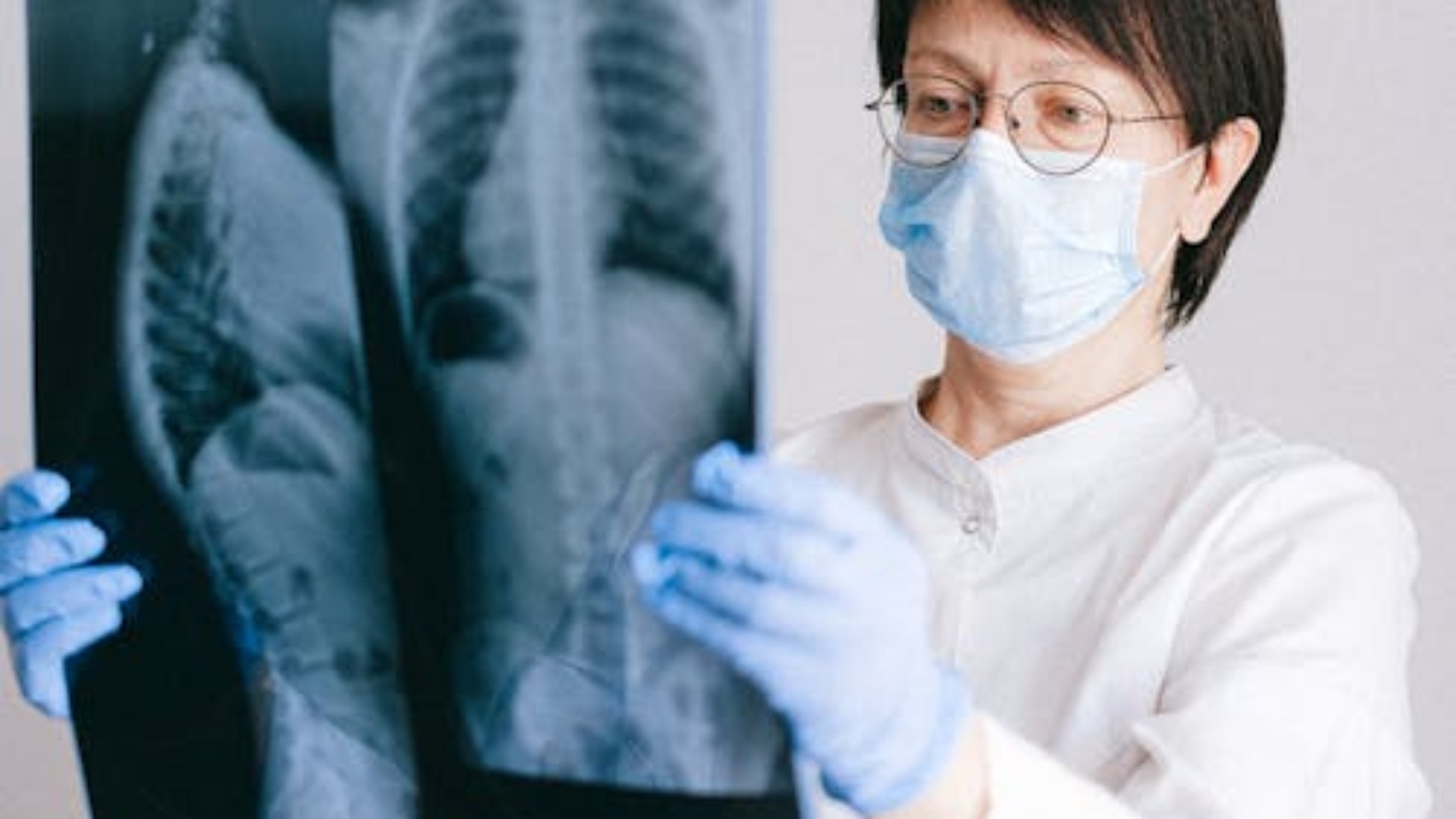
Fluoroscopy is real-time X-ray imaging. During a fluoroscopically guided procedure, the physician uses live X-ray to visualize bones, anatomical landmarks, and the position of the needle in real time as it is advanced.
Fluoroscopy is particularly valuable for spinal procedures — epidural injections, facet joint injections, medial branch blocks, radiofrequency ablation, and sacroiliac joint injections. The bony landmarks of the spine are clearly visible under fluoroscopy, allowing Dr. Osman to position the needle with high precision and confirm placement before injecting.
Contrast dye is often used during fluoroscopically guided spinal procedures — a small amount of dye is injected first to confirm that the medication is spreading where it should go, and not into a blood vessel or an unintended space. This is a safety step that is not possible without image guidance.
What Ultrasound Guidance Is and When It Is Used
Ultrasound uses sound waves to create real-time images of soft tissue structures — joints, tendons, ligaments, nerves, bursae, and vessels. Unlike fluoroscopy, ultrasound does not use radiation, making it particularly valuable for procedures where soft tissue rather than bony anatomy is the primary target.
Ultrasound guidance is especially useful for:
- Joint injections (knee, shoulder, hip) — allowing visualization of the joint space and confirmation that the needle is within the joint capsule
- Tendon and bursa injections — where precise placement within or adjacent to specific soft tissue structures is critical
- Nerve blocks — where the nerve itself can often be visualized in cross-section, allowing the physician to deposit medication precisely around the nerve rather than in its vicinity
- PRP and BMAC injections — where accurate delivery to the intended tissue is essential for the treatment to have its intended biological effect
- Trigger point injections — where specific muscle bands and fascial layers can be visualized
One of the most important advantages of ultrasound is vessel avoidance. Real-time color Doppler imaging allows the physician to identify blood vessels in the treatment area and adjust needle trajectory accordingly, significantly reducing the risk of inadvertent vascular injection.
Why This Matters More Than Many Patients Realize
Consider a PRP injection for knee osteoarthritis. The growth factors in PRP need to be deposited within the joint space to interact with cartilage and synovial tissue. If the needle is slightly off-target and the PRP is deposited in periarticular soft tissue rather than the joint itself, the intended therapeutic effect is reduced or absent — not because PRP does not work, but because it was not placed where it needed to go.
The same logic applies to nerve blocks: the medication needs to be deposited in the correct anatomical plane around the nerve to produce the intended effect. A few millimeters in the wrong direction can mean the difference between excellent relief and no relief at all.
For spinal procedures, image guidance is not just about efficacy — it is about safety. The epidural space, the area around nerve roots, and the facet joints are in proximity to structures where an inaccurate injection could cause serious harm. Fluoroscopic confirmation with contrast is the standard of care.
What to Ask When Choosing a Pain Provider
Before scheduling any injection procedure with a pain provider, it is entirely reasonable — and advisable — to ask: “Is this procedure performed under image guidance?” If the answer is no, or if it is dependent on which physician happens to be performing the procedure that day, that is important information.
At Cellara Pain Institute, image guidance is not optional or situational. It is the standard for all procedures — a non-negotiable commitment to precision, safety, and results.
To schedule a consultation with Dr. Mohamed Osman in Doylestown, visit cellarapain.com. No referral required. Same-week appointments available.
This content is for educational purposes only and does not constitute medical advice. Please consult with a qualified healthcare provider for personalized medical guidance.
Target Audience: All patient profiles — local SEO anchor, strong CTA
Word Count: ~1,000 words
Spine pain is one of the most common reasons people seek medical care — and one of the most frequently undertreated. For every patient who gets appropriate, targeted care for their back or neck pain, there are many others who are caught in a cycle of temporary relief and return symptoms, or who are told their only real option is surgery.
Surgery has an important place in spine care. For certain conditions — significant spinal instability, progressive neurological deficits, failed conservative management over an appropriate timeline — surgical intervention can be the right answer. But for the vast majority of patients with chronic back pain, neck pain, disc problems, and related conditions, non-surgical options remain undertapped.
Cellara Pain Institute in Doylestown, PA is dedicated to exactly this space: sophisticated, evidence-based, non-surgical spine care for patients across Bucks County.
The Anatomy of Spine Pain: Why It Is Complicated
The spine is not a simple structure. It is a complex system of vertebrae, intervertebral discs, facet joints, ligaments, muscles, and nerve roots — and pain can originate from any of them, often in combination. Two patients can have identical MRI findings and completely different pain experiences. Another patient can have significant pain with an MRI that looks relatively unremarkable.
This complexity is precisely why spine pain requires careful, individualized assessment — and why a physician who takes the time to understand the specific source of your pain is so much more effective than one who applies a standard protocol to everyone who walks in with back pain.
At Cellara Pain Institute, diagnostic evaluation is thorough. Dr. Mohamed Osman reviews your history, performs a targeted physical examination, and analyzes your imaging in context — not in isolation. The goal is to identify the actual pain generator before recommending any treatment.
Epidural Steroid Injections for Disc and Nerve Root Pain
When a herniated or bulging disc compresses a nerve root, the result is inflammation — and that inflammation is what drives much of the intense pain, burning, and radiating symptoms into the arm or leg. Epidural steroid injections deliver anti-inflammatory medication directly to the epidural space, as close as possible to the inflamed nerve root, where it is most effective.
At Cellara, epidural injections are performed under fluoroscopic guidance with contrast confirmation — the gold standard of technique. Transforaminal, interlaminar, and caudal approaches are all available depending on the anatomy of the patient’s specific condition.
For many patients with disc herniation, stenosis, or radiculopathy, a well-performed epidural steroid injection can provide significant and durable pain relief — often enough to allow meaningful participation in physical therapy and rehabilitation that accelerates overall recovery.
Facet Joint Treatments: From Injections to Radiofrequency Ablation
The facet joints are small paired joints that run along the back of the spine, one pair at each vertebral level. They are a frequently underrecognized source of chronic back and neck pain — responsible for a significant percentage of axial pain that does not have a disc origin.
For facet-mediated pain, Cellara offers a stepwise approach:
Medial branch blocks — diagnostic injections of local anesthetic near the sensory nerves supplying the facet joints. If a block produces significant temporary relief, it confirms that the facet joints are a meaningful pain source.
Facet joint injections — direct injection of anti-inflammatory medication into the joint for therapeutic relief.
Radiofrequency ablation (RFA) — for patients who have responded well to medial branch blocks, RFA uses controlled heat to interrupt pain transmission through the medial branch nerves, providing relief that can last from many months to over a year in appropriate patients.
All of these procedures are performed under fluoroscopic guidance.
Sacroiliac Joint Injections
The sacroiliac (SI) joint connects the base of the spine (the sacrum) to the pelvis and is a surprisingly common source of low back, buttock, and hip pain that is often misattributed to lumbar spine problems. SI joint dysfunction can develop from arthritis, injury, pregnancy-related changes, or altered biomechanics.
Cellara offers diagnostic and therapeutic SI joint injections under image guidance, as well as radiofrequency treatment of the SI joint nerves for appropriate patients seeking longer-term relief.
Regenerative Options for the Spine
For patients with degenerative disc disease or facet arthritis who are interested in regenerative approaches alongside or instead of traditional injections, Cellara offers PRP (Platelet-Rich Plasma) and BMAC (Bone Marrow Aspirate Concentrate) therapies. The evidence base for regenerative spine treatments is still evolving, and Dr. Osman will give you an honest, evidence-informed perspective on whether these options are appropriate in your specific case.
Trigger Point Injections for Muscle-Based Spine Pain
A significant portion of spine-related pain involves the muscles and connective tissue — not just the bony or disc structures. Myofascial trigger points are hyperirritable spots within muscle tissue that can cause localized and referred pain patterns that closely mimic disc or nerve problems.
Trigger point injections, performed with ultrasound guidance at Cellara, can provide meaningful relief for patients whose pain has a significant myofascial component — either as a primary source or contributing factor.
Serving All of Bucks County, Without the Runaround
Cellara Pain Institute is located in Doylestown and serves patients from throughout Bucks County — including Warminster, Newtown, Langhorne, New Hope, Perkasie, Chalfont, Lansdale, and beyond. No referral is required to schedule a consultation, and same-week appointments are available for new patients.
All major commercial PPO insurance plans are accepted, and the care you receive is individualized, expert, and delivered with genuine compassion. Dr. Osman — double board-certified, Harvard fellowship-trained, Castle Connolly Top Doctor 2024–2025 — is the physician you consult with and the physician who performs your procedures.
If you have been managing spine pain without getting the results you need, a conversation with a dedicated specialist may open doors you did not know were available.
Visit cellarapain.com to schedule your consultation or call our Doylestown office directly. Same-week appointments. No referral necessary. You have more options than you think.
This content is for educational purposes only and does not constitute medical advice. Please consult with a qualified healthcare provider for personalized medical guidance.
Ready to Get Relief?
Cellara Pain Institute serves patients in
Doylestown, PA, Langhorne, PA, and throughout Bucks County.
In-person visits and tele-visits . Same-week appointments . No referral needed
Regenerative medicine (PRP, BMAC)
Interventional procedures
Insurance and billing
(267) 500-9595
.
admin@cellarapain.com
Most major PPO insurance plans accepted
This content is for educational purposes only and does not constitute medical advice. Consult a qualified healthcare provider for personalized medical guidance.
Cellara Pain Institute serves patients in Doylestown, PA, Langhorne, PA, and throughout Bucks County, Pennsylvania.