Cellara Journal
Peripheral Neuropathy Pain: What Treatments Have Real Evidence
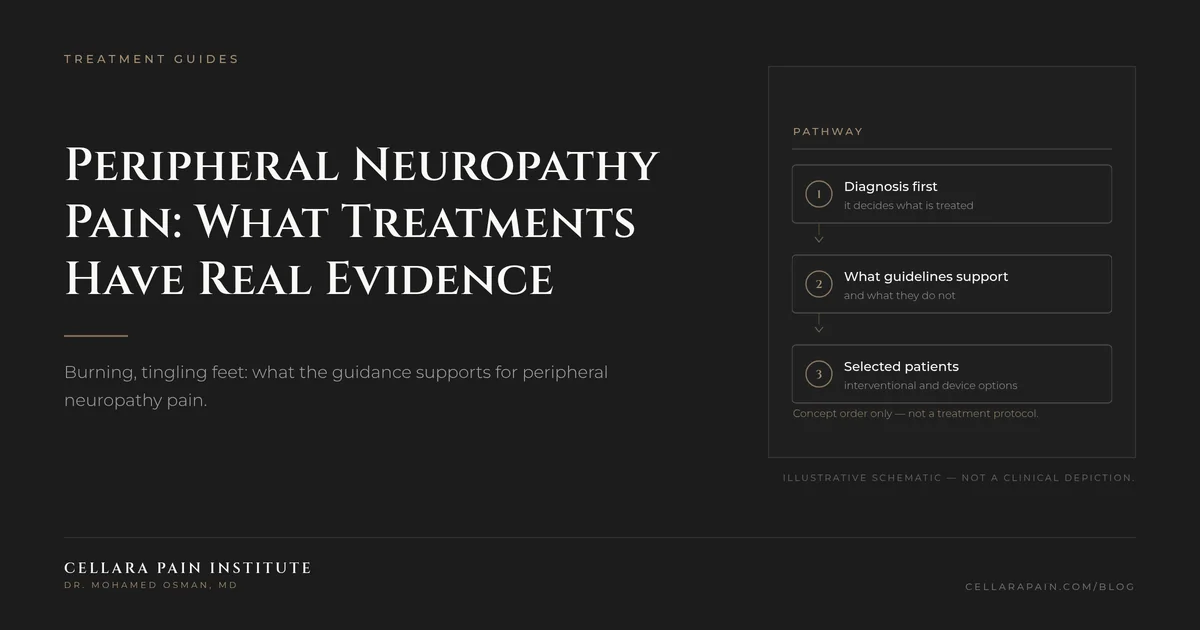
# Peripheral Neuropathy Pain: What Treatments Have Real Evidence Short answer: Painful peripheral neuropathy — the burning, tingling, stabbing feet that are worst at night — responds to a defined set of medications with real guideline support, including certain antidepressants, anticonvulsants and topical agents. It also needs a cause found and treated: diabetes, vitamin deficiencies, thyroid disease, alcohol and medication effects are common drivers. Nerve pain is one of the most under-treated and most over-promised problems in medicine. This article sticks to what guidelines and trials actually support.
01
First, the diagnosis matters
Peripheral neuropathy is not one disease; it is a pattern of nerve damage with many causes. The workup is not optional, because treating the cause can change the trajectory:
- Diabetes and prediabetes — the most common cause in the United States
- Vitamin B12 deficiency, including from metformin use
- Thyroid disease
- Alcohol use
- Kidney disease
- Certain chemotherapy agents and medications
- Genetic and autoimmune neuropathies
- Compression syndromes such as tarsal tunnel
Blood work and, in selected cases, nerve conduction studies or skin biopsy are how the cause is identified. Without that step, treatment becomes guesswork.
02
What the guidelines actually support
The American Academy of Neurology's evidence-based guideline on painful diabetic neuropathy graded medications by evidence class [1]. The ASPN pain-medicine workgroup produced a more recent comprehensive systematic guideline covering the same terrain [2], and a current clinical review summarises the practical approach [3].
Supported first-line categories:
| Category | Examples | Notes |
|---|---|---|
| Anticonvulsants (gabapentinoids) | Gabapentin, pregabalin | Gabapentin was rated probably effective in the AAN guideline [1] |
| SNRIs | Duloxetine, venlafaxine | Strong evidence in painful diabetic neuropathy |
| Tricyclic antidepressants | Amitriptyline, nortriptyline | Long-used; anticholinergic side effects limit use in older adults |
| Topical agents | Lidocaine patch, capsaicin | Useful for localized pain; low systemic risk |
Important caveats:
- These medications reduce neuropathic pain — they do not eliminate it. A 30–50% reduction is often a realistic, meaningful goal.
- Combining classes is common when one alone is insufficient, guided by side-effect profiles.
- Opioids are generally not first-line for chronic neuropathic pain given dependence and tolerance concerns.
- No single medication works for everyone. Response varies substantially, and trial-and-error is normal, which is frustrating but honest.
03
What has weaker or no support
Be cautious of:
- "Nerve regeneration" supplements and proprietary blends sold without trial evidence
- IV vitamin drips marketed as neuropathy cures
- Regenerative injections marketed for diabetic neuropathy as though they were established therapy
- Chiropractic or laser packages advertised with fixed success rates
- Stem cell clinics claiming to reverse nerve damage — see our separate explainer on FDA status
None of these has the guideline-level support that gabapentinoids, SNRIs or topicals do.
04
Interventional and device options for selected patients
For severe, refractory painful diabetic neuropathy, spinal cord stimulation has randomized trial support and is recognised in clinical reviews as a treatment for carefully selected patients [3]. It is a significant step — a trial lead, then an implant — and it is not for everyone. Neuromodulation discussions belong with a pain specialist after medication options have been properly tried.
05
The part patients underestimate
Treating the cause changes the outcome. Intensive glucose control, correcting B12 deficiency, treating thyroid disease and reducing alcohol all influence nerve health over time. Existing nerve damage usually does not reverse fully, but the trajectory can be slowed.
Also useful and often neglected:
- Foot care. Loss of sensation means injuries and ulcers go unnoticed. Daily foot checks matter.
- Sleep. Neuropathic pain is worst at night. Poor sleep amplifies pain perception — treating sleep is treating pain.
- Physical activity, adapted to your feet and balance.
- Falls prevention — numbness and balance loss are a falls risk.
06
Red flags: do not wait
Seek urgent or prompt care for:
- A foot wound, ulcer, redness or discharge — especially with diabetes; this is urgent
- Rapidly progressive weakness, such as foot drop or difficulty climbing stairs
- Symptoms on both sides that are worsening over weeks, not months
- Bowel or bladder dysfunction with saddle numbness — emergency
- Numbness or weakness after starting a new medication
- Sudden one-sided weakness or facial droop — emergency
07
FAQ
Can neuropathy be cured? Usually not fully reversed, but pain can often be reduced substantially and progression slowed by treating the cause.
How long until medication works? Weeks, not days. Many agents need titration to an effective dose.
Why does it hurt more at night? Less distraction and altered pain processing at night. It is a recognised pattern, not imagination.
Is gabapentin addictive? It is not an opioid, but it is not risk-free. It requires dosing care, and stopping needs tapering.
08
Bottom line
Painful peripheral neuropathy has real treatment options: gabapentinoids, SNRIs, tricyclics and topicals, used with a proper diagnosis and an attempt to treat the underlying cause. Improvements are usually partial. Beware anyone offering a cure — especially if the treatment is expensive, unapproved and sold outside guideline-supported care.
Cellara Pain Institute in Langhorne, PA evaluates nerve pain carefully, distinguishes neuropathic from musculoskeletal pain, and builds a medication and interventional plan around what the evidence supports.
09
References
- Evidence-based guideline: Treatment of painful diabetic neuropathy (AAN) — https://pmc.ncbi.nlm.nih.gov/articles/PMC3100130/
- ASPN systematic guideline on treatments for painful diabetic peripheral neuropathy — https://pmc.ncbi.nlm.nih.gov/articles/PMC11022879/
- Diagnosis and Treatment of Painful Diabetic Peripheral Neuropathy — https://www.ncbi.nlm.nih.gov/books/NBK580224/
Ready to talk about your care?
Book a consultation
A consultation gives you time to discuss your history, questions, and treatment options with a specialist.
Book a Consultation